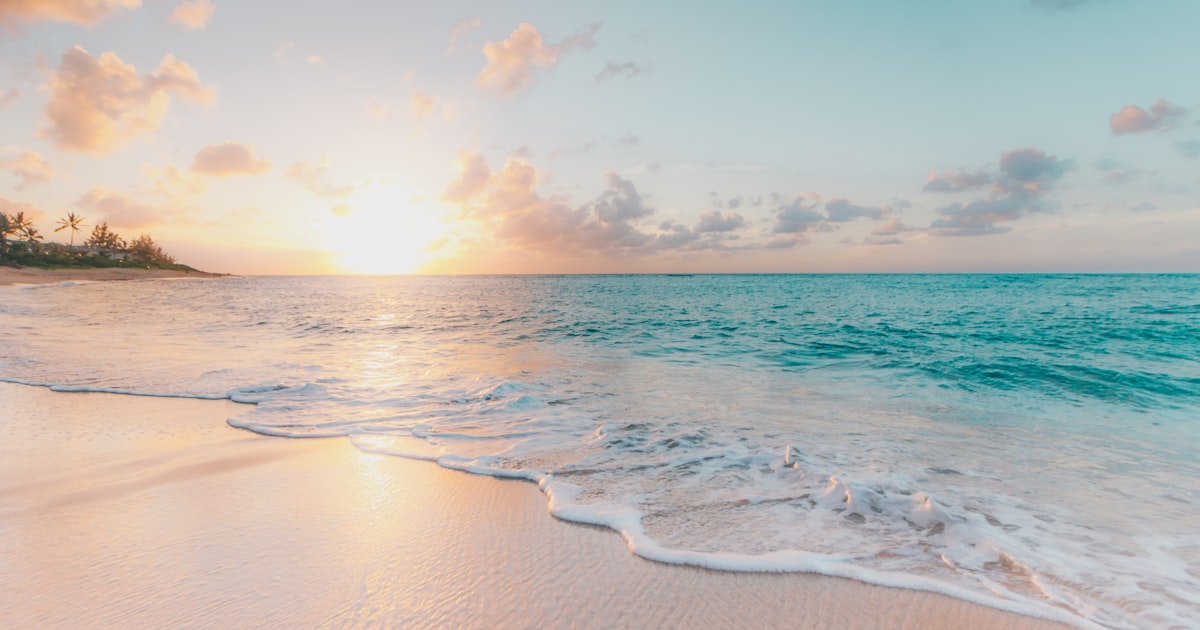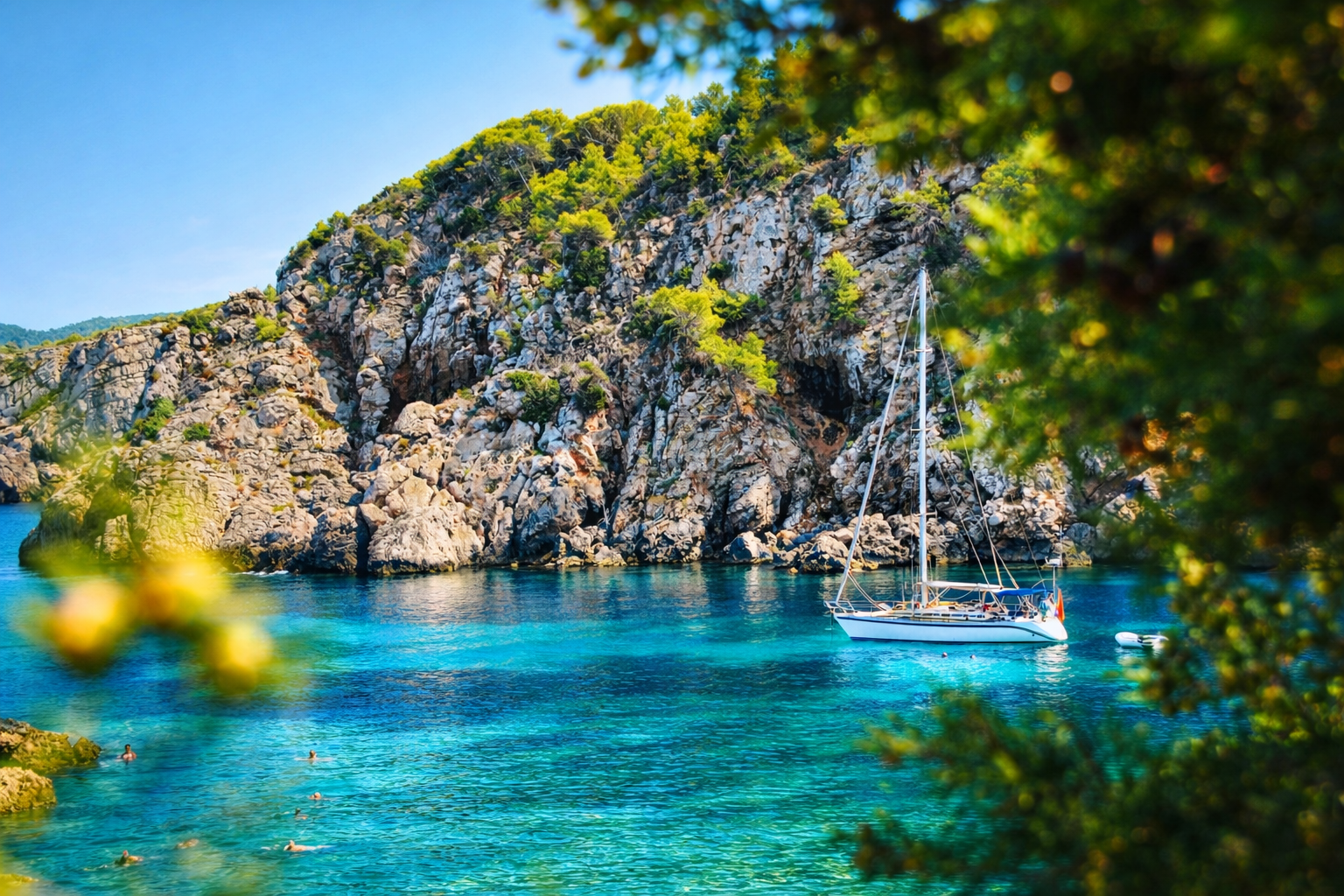
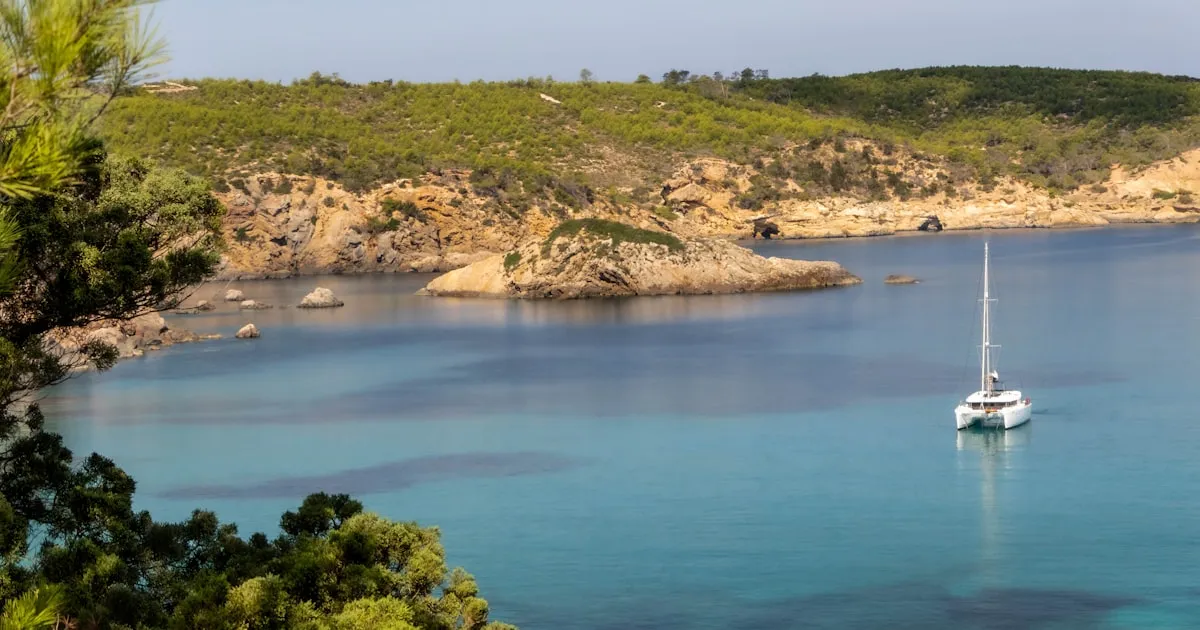
Ibiza has over 80 beaches, but the ones you can drive to are just the beginning. The island's most spectacular spots — dramatic cliff-backed coves, crystal-clear natural pools, and untouched stretches of sand — are hidden along the coastline, accessible only from the water.
Renting a boat in Ibiza isn't just about the ride. It's about reaching places that most visitors never see. Here are our 10 favourite beaches and coves that you can only get to by boat, with anchoring advice and the best times to visit each one.
1. Atlantis (Sa Pedrera)
One of Ibiza's most surreal landscapes. Atlantis is an ancient quarry site carved into the cliffs below the Torre des Savinar watchtower, near Es Vedrà. The rock has been cut into geometric shapes over centuries, creating flat platforms, shallow pools, and cave-like formations right at the water's edge. It feels otherworldly.
While technically reachable on foot via a steep, unmarked cliffside trail (not recommended), the only practical and safe way to visit is by boat. The water around Atlantis is deep blue and incredibly clear, perfect for cliff jumping and snorkelling.
Anchoring: There's no sandy bottom here — the seabed is rocky. Approach carefully and anchor in 5–8m of water on a sand patch about 40m from the rocks. Use a long anchor line. In swell, this spot can be uncomfortable, so check conditions.
Best time: Morning, when the sun illuminates the rock formations and the water is calmest. Avoid afternoon westerly winds.
Nearest departure: San Antonio or Cala Vedella (15–25 min by boat).
2. Cala d'en Serra
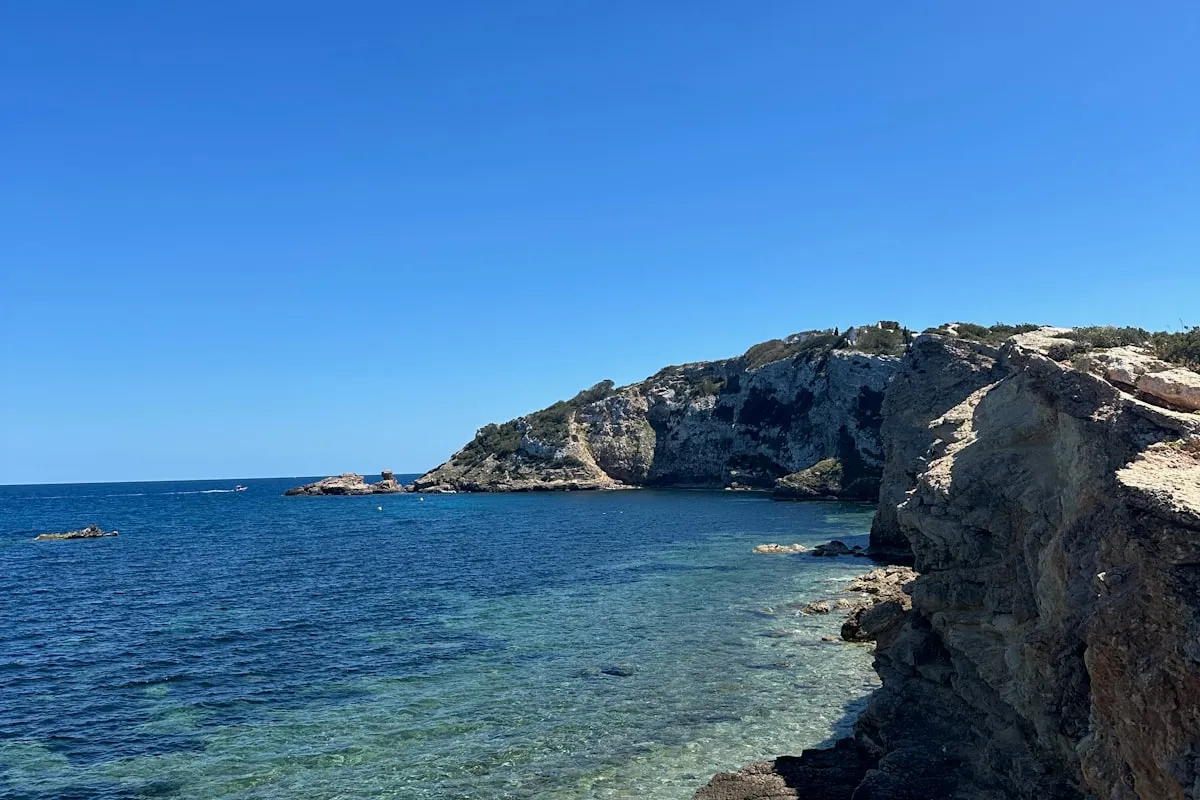
A tiny, wild beach in the far northeast of Ibiza. The road to Cala d'en Serra was never completed — an abandoned construction project left half-built structures that have become an eerie landmark. The beach itself is a small arc of sand and pebbles backed by steep green cliffs. The water is transparent and sheltered from most winds.
By boat, you avoid the very rough dirt track that leads to the beach by land (4WD only, and often impassable). You arrive in a pristine setting with rarely more than a handful of other boats.
Anchoring: Sandy bottom in the bay, 3–5m deep. Good holding. The bay faces northeast, so it's sheltered from the dominant summer winds (west/southwest). Avoid on days with strong north or east wind.
Best time: All day in summer. The cliffs provide shade in the late afternoon. Bring snorkelling gear — the underwater rocks on the east side are teeming with fish.
Nearest departure: Portinatx (10 min by boat) or Santa Eulalia (30 min).
3. Punta Galera
Not a beach in the traditional sense — Punta Galera is a series of flat, layered rock shelves that step down into deep, clear water. It's a natural infinity pool carved by millennia of waves. The geometry of the rocks is stunning, and the sunset views toward the open sea are among Ibiza's best.
By land, it's a 15-minute walk from the nearest road through pine forest. By boat, you anchor directly in front and swim to the rocks. It's far more convenient and you get to see the full scale of the formation from the water.
Anchoring: No sand bottom — rocky seabed with scattered sand patches. Anchor in 6–10m of water about 50m from the rocks. Not recommended in any swell. Best on very calm days.
Best time: Late afternoon to sunset. The flat rocks face west, catching the golden light perfectly. Bring drinks and snacks — there are no facilities.
Nearest departure: San Antonio (15 min by boat).
4. S'Espalmador
A privately owned uninhabited island between Ibiza and Formentera. S'Espalmador has one of the most beautiful beaches in the Balearics — a long, gently curving stretch of white sand with water so clear you can see the bottom 5 metres down. There's a natural mud pool inland that visitors use as a spa treatment.
The island is only accessible by boat (or by wading through shallow water from northern Formentera at low tide, which is unreliable). By boat, you anchor in the western bay and swim or dinghy ashore.
Anchoring: Sandy bottom, excellent holding, 2–4m depth. Drop anchor 30–50m from shore. The bay is sheltered from west and south winds. In strong east wind, the anchorage becomes uncomfortable.
Best time: Early morning (before 10 AM). The anchorage fills up fast in summer — by noon there can be 50+ boats. Weekdays are significantly quieter than weekends.
Nearest departure: Any south Ibiza point — Playa d'en Bossa (25 min), Ibiza Town (35 min).
5. Cala Llentrisca
A wild, untouched cove on Ibiza's remote southwest coast. Cala Llentrisca has no road access, no buildings, no facilities — just steep pine-covered cliffs dropping into deep green water. The "beach" is a small patch of pebbles, but the real attraction is the dramatic scenery and the incredibly clear water.
Snorkelling here is outstanding. The rocky bottom is covered in sea fans and you'll see grouper, octopus, and colourful wrasse. On calm days, the visibility exceeds 30 metres.
Anchoring: The cove is narrow with rocky sides. Anchor in the centre in 5–8m of water on a sand patch. Check your anchor is set properly — the bottom is mixed sand and rock. Only suitable in calm conditions with west/northwest winds.
Best time: Morning, when the sun lights up the water and the air is still. This is a true wilderness spot — perfect for those seeking solitude.
Nearest departure: Es Cubells (10 min) or Ibiza Town (30 min).
6. Cala d'Albarca
The most dramatic cove on this list. Cala d'Albarca sits at the base of 100-metre-high cliffs on the wild north coast of Ibiza. The scale is awe-inspiring — looking up from the water, the cliff face towers above you. There's a natural arch in the rock that you can navigate through by dinghy or kayak.
There's no beach here — just deep water meeting sheer rock. But the swimming is extraordinary, the snorkelling is world-class, and the sense of remoteness is unmatched on the island. Sea birds nest in the cliff face above.
Anchoring: Deep water (10–15m) with rocky bottom. Anchoring is tricky — use a long chain and ensure your anchor catches in a crevice or sand pocket. Only visit in very calm conditions — the north coast is exposed and can have significant swell.
Best time: Midday, when the sun reaches into the cove. Check the weather carefully — this spot is only safe in calm seas.
Nearest departure: San Miguel (20 min) or Portinatx (30 min).
7. Es Portitxol
A miniature paradise near Portinatx in the north. Es Portitxol is a tiny islet just 50 metres offshore, creating a sheltered channel of incredibly clear water between itself and the main island. The seabed is white sand, making the water glow bright turquoise. It looks like a tropical lagoon.
You can swim across the channel to the islet and explore its rocky terrain. The snorkelling between the islet and shore is exceptional — expect to see octopus, moray eels, and schools of dream fish.
Anchoring: Anchor outside the channel in 4–6m of water on the sandy bottom. Don't attempt to anchor in the narrow channel itself. The approach requires care — there are submerged rocks on the north side.
Best time: All day. The channel is sheltered from most wind directions. Bring snorkelling gear — this is one of Ibiza's best underwater spots.
Nearest departure: Portinatx (5 min by boat).
8. Cala Xuclar
A hidden gem even by Ibiza standards. Cala Xuclar is a tiny inlet near Portinatx with a few old fishermen's huts, crystal-clear water, and a seabed of white sand and seagrass that creates stunning colour patterns. It's one of the most photogenic spots on the island.
By land, there's a small car park and a short walk, but the beach is so small that it fills up by mid-morning. By boat, you anchor just offshore and have the water to yourself — plus you get the stunning perspective of the cove from the sea.
Anchoring: Shallow water (2–3m) with sandy bottom. Anchor outside the small bay and swim in. Space for only 3–4 boats — arrive early.
Best time: Early morning or late afternoon when the land visitors have left. The water is so clear here that snorkelling is rewarding even without going far from the boat.
Nearest departure: Portinatx (5 min) or San Juan (15 min).
Discover Ibiza's Hidden Coast
Rent a boat and explore the beaches that most visitors never see. From small no-license boats to fully crewed yachts, find the perfect vessel for your adventure.
Browse Boats9. Illa des Bosc
A small island just off the coast near San Antonio, Illa des Bosc (also known as Illa Conillera) is a nature reserve with no public access on land. But the waters around it are spectacular — rocky reefs, caves, and sandy patches create a diverse underwater landscape. Schools of barracuda and large grouper are common sightings.
The best spot is the sheltered bay on the southeast side of the island, where the water is turquoise and calm. You can snorkel right from your boat over the rocky reef that drops from 2m to 15m depth.
Anchoring: Sandy bottom in the southeast bay, 3–5m depth. Good holding. The island shelters you from northwest winds. On calm days, you can also anchor on the north side for a more remote experience.
Best time: Midday for the best light on the water. Combine with a visit to Cala Comte (10 minutes away by boat) for a full west coast day.
Nearest departure: San Antonio (15 min by boat).
10. Es Vedrà Circumnavigation
Es Vedrà is Ibiza's most iconic landmark — a 400-metre-tall rocky island 2 km off the southwest coast, shrouded in legend and myth. You can't land on Es Vedrà (it's a protected nature reserve), but circumnavigating it by boat is one of the most spectacular experiences in the Mediterranean.
The sheer cliffs, sea caves, and the scale of the rock are breathtaking from the water. On the far side (invisible from Ibiza), there are dramatic overhangs and a cave that you can enter with a dinghy. Falcons and seabirds circle the summit, and the deep blue water around the base is often visited by dolphins.
Anchoring: Don't anchor too close to the island — the bottom drops off steeply and currents can be strong. The best spot to pause is the sand patch between Es Vedrà and the smaller Es Vedranell, in 8–12m of water. Not recommended in strong winds or swell from any direction.
Best time: Morning for the calmest water. The circumnavigation takes about 30–45 minutes at slow speed. Combine it with a visit to Atlantis (15 minutes further north) or Cala d'Hort (10 minutes east).
Nearest departure: Cala Vedella (10 min) or San Antonio (25 min).
Essential Gear for Beach-Hopping by Boat
To make the most of these hidden beaches, make sure you have:
- Snorkelling mask and fins: Non-negotiable. The underwater scenery at these spots rivals the beaches themselves.
- Reef-safe sunscreen (SPF 50+): You'll be in the sun all day with water reflecting UV. Reapply every 90 minutes.
- Waterproof dry bag: For phones, cameras, keys, and wallets. Salt water kills electronics instantly.
- Cooler with ice: Pack water (2L per person), snacks, and cold drinks. There are no shops at any of these beaches.
- Anchor float/buoy: Attach one to your anchor line so other boats can see it. Essential in popular anchorages.
- Water shoes: Several of these coves have rocky entries. Water shoes save your feet.
- Lightweight windbreaker: For the boat ride back. Once the sun drops and you're moving at speed, it gets cool.
Safety Reminders
Some of these coves are remote. Keep these safety points in mind:
- Always tell someone your planned route and expected return time.
- Check weather and sea conditions before departing and monitor them throughout the day.
- Carry a fully charged phone in a waterproof case. Save the rental company's number and 112 (emergency).
- Know your fuel range and plan your route accordingly. Don't leave the last cove with the fuel gauge on empty.
- Watch for currents near headlands and open passages between islands.
- Respect Posidonia meadows — anchor only on sand. The dark patches are seagrass, not deep water.
Frequently Asked Questions
Can I visit these beaches with a license-free boat?
Some of them — specifically the ones within 2 nautical miles of your departure point. Cala Xuclar, Es Portitxol, and Cala d'en Serra are all accessible from Portinatx on a no-license boat. Punta Galera is reachable from San Antonio. However, more remote spots like Cala d'Albarca, Atlantis, S'Espalmador, and the Es Vedrà circumnavigation require a licensed boat due to distance or conditions.
Which beaches are best for snorkelling?
Es Portitxol and Cala Llentrisca are the top snorkelling spots on this list. Illa des Bosc is also excellent for its reef. Atlantis has interesting underwater rock formations. The channel at S'Espalmador has clear water but less marine life due to the sandy bottom.
Are these beaches suitable for children?
S'Espalmador, Ses Illetes (Formentera), and Cala Xuclar are family-friendly with shallow, calm water and sandy bottoms. Spots like Atlantis, Cala d'Albarca, and Es Vedrà are better suited to adults and confident swimmers due to deep water, strong currents, or lack of easy water access.
How many beaches can I visit in one day?
Realistically, 3–4 if you want to actually enjoy each one. Spending 1.5–2 hours at each beach gives you time to swim, snorkel, eat, and relax. Factor in 15–30 minutes of travel between each stop, plus the journey to and from your departure point. Don't try to rush through all 10 in a single day.
What's the best time of year for these boat trips?
June and September are ideal — warm water, calm seas, fewer crowds. July and August have the warmest water (26–28°C) but anchorages at popular spots fill up early. May and October are pleasant for boating but water is cooler (20–22°C) and some beach bars may be closed.
Is there phone signal at these remote beaches?
Most spots have 4G coverage, but signal can be weak at Cala d'Albarca and some north coast coves. S'Espalmador has patchy coverage. Always have your emergency plan ready and don't rely solely on your phone for navigation — download offline maps before you depart.